Case Study · Vertical Farming
400% more capacity. One new hire.
A Missouri vertical farming startup needed to scale operations without scaling headcount. They didn't know where AI fit. We showed them — before they signed anything.
Operations growth at 6 months
growing containers — one new employee added
The Situation
A team doing more than a team their size should handle.
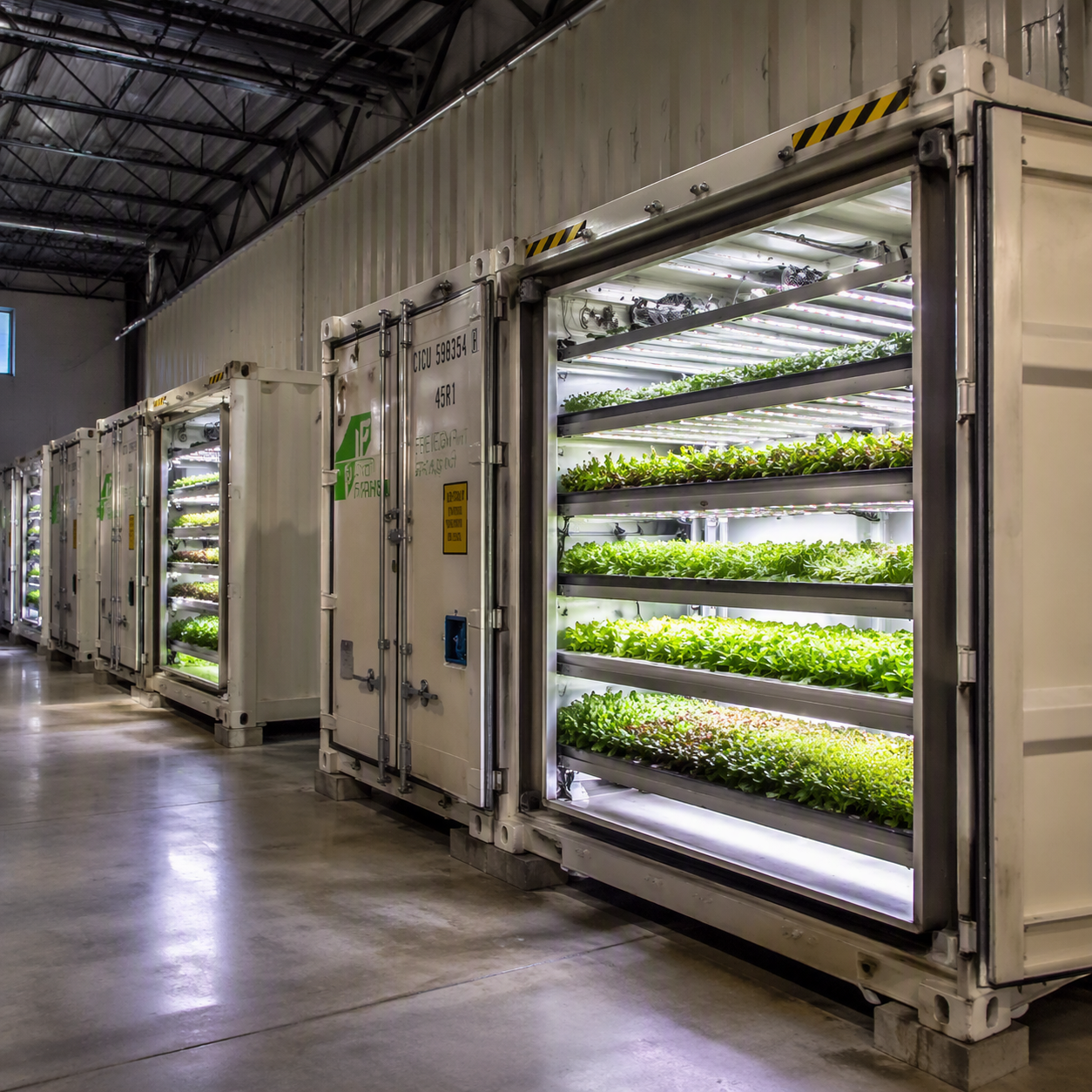
Vertical farming operations are data-intensive by nature. Every growing container is an ecosystem of variables — pH, humidity, lighting, nutrients, CO₂ — that need constant monitoring to keep crops healthy. A small startup team can sustain that manually. They can't scale it.
This team had sophisticated instruments and real data. What they didn't have was a way to see across all of it — to spot patterns before they became problems, to correlate variables holistically, to move from reactive monitoring to predictive management. Their instruments generated the signal; the team was spending their time being the receiver.
They believed AI might change that. But the landscape was unfamiliar, the options overwhelming, and the core question unanswered: would AI genuinely cost less than hiring? How would they even measure it?
So they did what smart teams do when they're uncertain: they ran a competitive evaluation. Multiple boutique firms. Consultations. Project plans. They weren't looking for the lowest price — they were looking for the firm that actually understood their problem.
How We Showed Up
Every other firm
brought a plan.
We brought a demo.
Rather than present a project plan and ask them to imagine the outcome, we built a working mock dashboard of what their AI-powered monitoring operation could look like — free of charge, before any engagement was signed.
What the mock dashboard showed
An AI agent continuously reading IoT data across all growing containers — pH, humidity, lighting/UV, temperature, CO₂, nutrient levels — and surfacing what mattered: threshold breaches, emerging patterns, anomalies that would have taken a human hours to find through manual sampling.
Not a mockup of pretty charts. A working prototype on their actual data types, showing the team what their morning would look like if AI was doing the monitoring.
Why it worked
The client's instruments were already generating the data. The gap wasn't collection — it was analysis. Humans sampling data points manually can catch individual readings outside range. They can't reliably spot multi-variable patterns across time, correlate pH drift with humidity cycles, or predict a cascade before it starts.
That's precisely what AI pattern recognition does well. Showing it on their data, in their context, answered the ROI question faster than any slide deck could.
What We Built
A proprietary AI
monitoring system
built for their operation.
The engagement covered four phases: architecture planning, dashboard build, production deployment, and fractional ongoing support. Each phase gated on the previous — no open-ended commitment, defined scope at every stage.
Variables monitored continuously by AI
Architecture & data mapping
Mapped all IoT data sources, defined the monitoring logic and alert thresholds, designed the AI agent architecture, and established the analytics framework — before a line of production code was written.
Proprietary dashboard development
Built a custom AI monitoring dashboard that ingests live IoT data, applies pattern recognition models across all variables simultaneously, surfaces anomalies, and generates actionable alerts — not raw data dumps.
Production rollout
Deployed to their live growing environment with phased container onboarding. The team transitioned from manual sampling runs to AI-generated monitoring reports — reviewing insights instead of collecting data.
Fractional ongoing support
CommonLogic remained fractionally embedded — tuning models as new crop varieties were introduced, expanding container coverage, and advising on the next automation opportunity as the operation scaled.
How we ran the engagement — POINT
Prioritize the Problem
There was no clear problem statement — just a belief that AI might help and a team too stretched to explore it systematically. Rather than guessing, we built clarity. The real problem: a small team manually monitoring vast amounts of IoT data they couldn't analyze holistically, limiting how fast they could scale without adding headcount.
Outline the Win
The value case came from the mock dashboard itself — not a slide deck. Showing the client what AI-driven IoT monitoring looked like in practice made the ROI concrete: fewer manual sampling runs, pattern detection no human could do consistently across hundreds of variables, and a team that could expand operations instead of just sustaining them.
Implement Rapidly
A multi-phase engagement: plan the architecture, build the proprietary monitoring dashboard, deploy to production, then provide fractional ongoing support. Each phase had defined scope and measurable milestones before the next began.
Normalize the New Workflow
AI monitoring became the operational baseline — IoT thresholds tracked continuously, patterns surfaced automatically, alerts escalated only when human judgment was required. The team stopped sampling data manually and started making decisions from it.
Track and Expand
Six months in: one net-new employee added, operations expanded across 400% more growing containers. The AI-driven monitoring system scaled with the operation — without the headcount that would have otherwise been required.
Learn more about the POINT framework → How We Deliver
Outcomes
They didn't hire
their way to scale.
They built it.
Six months after the proprietary dashboard went live, the team had expanded growing operations across 400% more containers. They added one employee to support that growth — not the five or six that expansion at that rate would have historically required.
The original question — is AI actually cheaper than hiring? — was answered in operations, not in a spreadsheet.
Container capacity growth at 6 months
across new growing containers — same team, one new hire
Headcount added
to support 5× larger operation
Engagement phases
plan · build · deploy + fractional support
Free demo won the competitive evaluation
While other firms presented plans, we showed a working prototype. The client had a concrete answer to "what does AI actually do for us?" before committing to anything.
Manual sampling replaced by continuous AI monitoring
Employees stopped spending time collecting data and started spending it on decisions. Pattern detection that previously required hours of analysis — or was missed entirely — now happens automatically.
Multi-phase engagement: plan → build → deploy → support
A year-long relationship with gated phases — each one justified by the results of the last. No open-ended commitment. No trust-me-it'll-be-worth-it.
Not sure if AI is right
for your operation?
We'll show you what it looks like for your specific workflows — before you sign anything. If it doesn't make sense for where you are right now, we'll tell you that too.
Talk to us